What to Say to Someone Who Is Grieving (And What Not to Say)

When someone you care about is grieving, it's natural to feel helpless.
You want to say the right thing. You want to ease their pain somehow. You want to show up for them in a way that actually matters.
But grief is awkward territory. Most of us were never taught how to navigate it. And the fear of saying the wrong thing can be paralysing.
So you say nothing. Or you say something that comes out wrong. Or you avoid the person altogether because you just don't know how to be around their pain.
I've been on both sides of this.
After my mum died, I learned very quickly which words helped and which ones, despite good intentions, made everything harder. And I've also been the awkward friend, standing in front of someone's grief with no idea what to say.
So here's what I've learned. Not rules, exactly. Just honest observations about what actually helps when someone is grieving.
Why We Struggle to Find the Right Words
Before we get into what to say, it helps to understand why this is so hard.
Most of us are deeply uncomfortable with grief. We live in a culture that prizes positivity, productivity, and "moving forward." Sitting with someone in their pain , without trying to fix it, goes against everything we've been taught.
So when someone is grieving, our instinct is often to make them feel better. To find a silver lining. To remind them that things will improve.
This comes from a good place. We don't want them to hurt.
But grief doesn't need to be fixed. It needs to be witnessed.
And that's a very different thing.
The Most Helpful Thing You Can Say
If you take nothing else from this article, take this:
"I'm so sorry. I'm here."
That's it.
You don't need to explain why this happened. You don't need to offer perspective. You don't need to find meaning in their loss.
You just need to acknowledge that something terrible has happened and that you're not going anywhere.
"I'm so sorry. I don't know what to say, but I'm here."
"I'm so sorry. I'm thinking of you."
"I'm so sorry. I love you."
These simple words do more than you might think. They tell the grieving person: I see your pain. I'm not running from it. You're not alone.

What Grieving People Actually Want to Hear
When I was grieving, the words that helped most weren't profound. They were honest.
"I don't know what to say." This is so much better than filling the silence with platitudes. Admitting you don't have the right words is its own kind of comfort. It's honest. It's human.
"I'm not going to try to fix this." One friend said this to me early on, and I nearly cried with relief. She wasn't going to tell me it would get better or that everything happens for a reason. She was just going to sit with me in the wreckage.
"Tell me about them." This one surprised me. I thought people would avoid mentioning my mum because it might upset me. But I wanted to talk about her. I wanted to say her name. When someone invited me to share a memory or tell a story, it felt like a gift.
"There's nothing I can say to make this better, but I love you." Sometimes the most comforting thing is acknowledging that comfort isn't really possible right now. The loss is too big. The pain is too raw. But love is still there.
"I'll check in on you next week." And then actually doing it. Grief is lonely, especially after the first few weeks when everyone else has moved on. The people who kept showing up, not just in the immediate aftermath, but months later, meant more than I can express.
What Not to Say
Now for the harder part.
These are phrases that people say with good intentions but often land badly. I'm not sharing this to make you feel guilty if you've said them. I've said some of these myself before I understood grief from the inside.
But if you can, try to avoid:
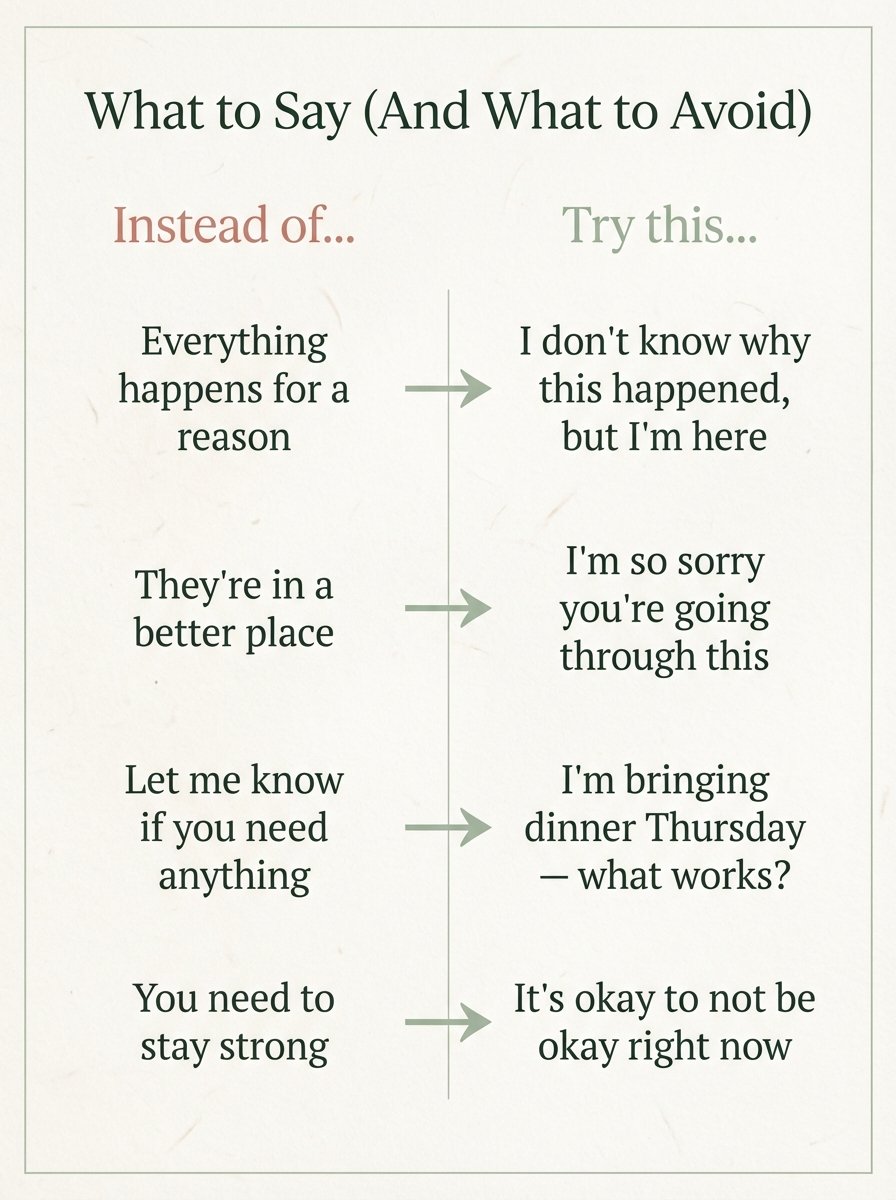
"Everything happens for a reason." This is probably the most common thing people say, and it's almost never helpful. When you're in the depths of grief, being told there's a reason for your pain can feel dismissive, like your loss is just a plot point in some larger plan.
Even if you believe this philosophically, it's not what someone needs to hear when they're raw.
"They're in a better place." This assumes a set of beliefs the grieving person may not share. And even if they do believe in an afterlife, "a better place" isn't here. It isn't with them. That's the whole problem.
"At least they're not suffering anymore." This might be true, especially after a long illness. But "at least" sentences tend to minimise grief. They imply the person should be grateful or comforted when they're not ready to feel either.
"I know exactly how you feel." You don't. Even if you've experienced a similar loss, grief is so individual that no two experiences are the same. A gentler version might be: "I've experienced loss too, so I have some sense of how painful this is."
"You need to stay strong." Grief isn't a test of strength. Telling someone to be strong implies that falling apart is a failure. But falling apart is sometimes exactly what needs to happen.
"Let me know if you need anything." This one is tricky because it's genuinely well-meaning. But grieving people often can't identify what they need, and reaching out to ask for help takes energy they don't have.
If you want to help, offer something specific: "I'm bringing you dinner on Thursday." "I'm going to call you Sunday afternoon." "I'm dropping off groceries — what do you need?"
It's Not About the Perfect Words
Here's something I wish I'd understood earlier: it's not really about what you say.
It's about whether you show up.
The people who helped me most weren't necessarily eloquent. They didn't have beautiful speeches or perfect timing. Some of them said awkward things. Some of them fumbled their words.
But they were there.
They sat with me when I cried. They texted me on hard days. They mentioned my mum's name months later, when everyone else had stopped. They didn't disappear when my grief became inconvenient.
That presence mattered more than any words.
When You Don't Know the Person Well
It's one thing to support a close friend or family member. But what about acquaintances? Colleagues? Someone you don't know intimately but want to acknowledge?
In these cases, keep it simple and sincere.
"I was so sorry to hear about your loss. I'm thinking of you."
"I don't know you well, but I wanted you to know I'm sorry."
"Please don't feel any pressure to respond to this — I just wanted to say I'm thinking of you."
You don't need to have a deep relationship with someone to acknowledge their pain. A short, genuine message can mean a lot, especially when it comes from an unexpected source.
The Gift of Saying Their Name
One thing that surprised me after my mum died was how much I wanted people to say her name.
I thought it might be painful. And sometimes it was. But more often, it was a relief.
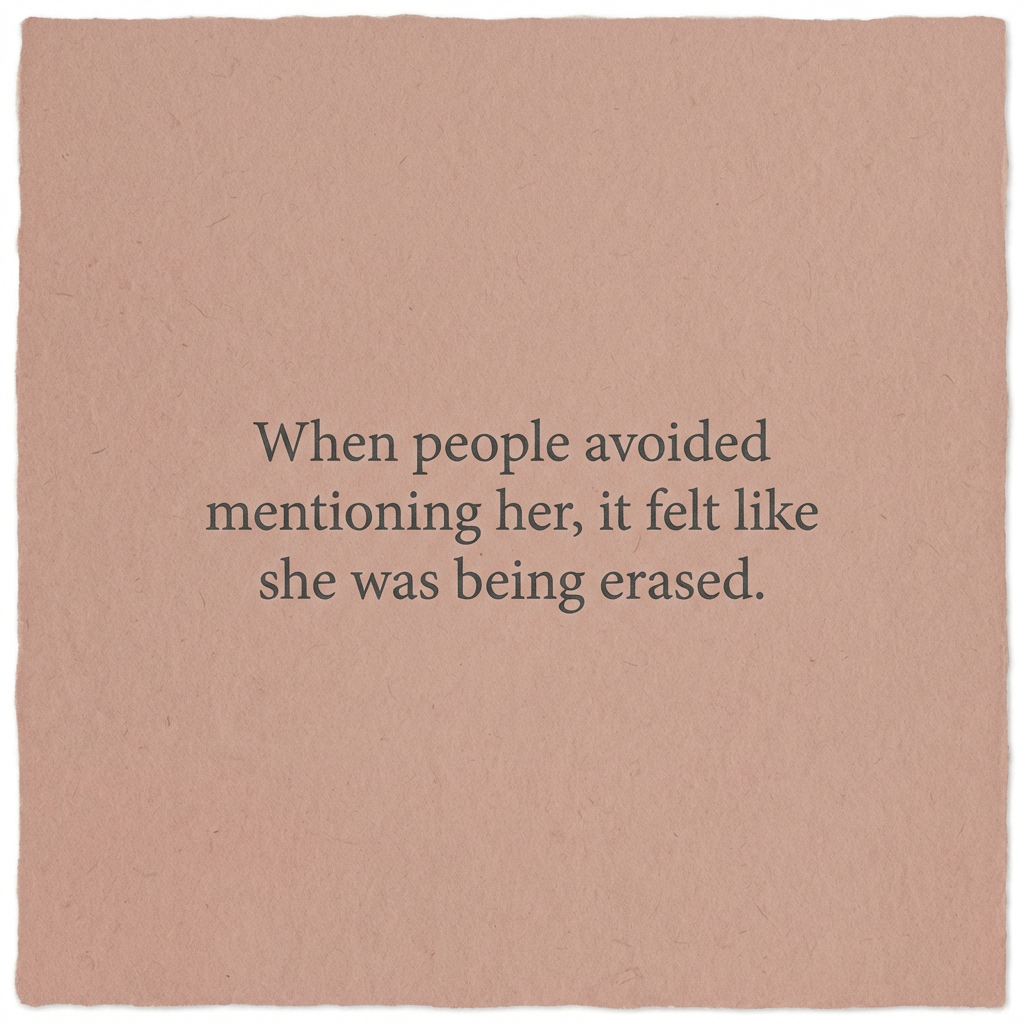
When people avoided mentioning her, it felt like she was being erased. Like her existence was too uncomfortable to acknowledge.
But when someone said, "I was thinking about your mum today" or "I remember when your mum did this," it felt like she was still real. Still present in the world somehow.
If you know the name of the person who died, use it. It's a small thing, but it matters.
What to Do When You've Said the Wrong Thing
If you've already said something unhelpful, and most of us have, don't panic.
Grieving people are usually pretty forgiving of fumbled words. They know you're trying. They know grief makes everyone awkward.
If you realise you've said something that landed badly, a simple acknowledgment goes a long way:
"I've been thinking about what I said, and I'm not sure it came out right. I just want you to know I care about you and I'm here."
You don't need to over-explain or make it about your discomfort. Just acknowledge it and move on.
Showing Up Over Time
Grief doesn't end after the funeral.
In some ways, the hardest period comes later, weeks or months after the death, when the cards stop arriving and everyone else has returned to normal life.
This is when grieving people often feel most alone.
If you want to truly support someone, mark your calendar. Check in at the one-month mark. The three-month mark. The anniversary.
Send a text that says: "I know it's been a few months, but I'm still thinking about you and your mum."
These late-stage gestures often mean more than the early ones, because they prove you haven't forgotten.
You Don't Have to Have the Answers
The most important thing I can tell you is this: you don't have to fix someone's grief.
You don't have to find the perfect words. You don't have to make them feel better. You don't have to have answers to impossible questions.
You just have to be willing to sit in the discomfort with them.
Grief is lonely. The greatest gift you can offer is your presence, awkward, imperfect, uncertain as it might be.
Say something simple. Say their loved one's name. Show up again next month.
That's what helps.
That's what matters.
Anam Life offers 12 weeks of gentle support for people moving through grief. Our guided experience includes letters, reflection prompts, and rituals — a steady companion for people who need something to return to. Join the waitlist.