Grief Comes in Waves: What No One Tells You About Why It Hits Out of Nowhere

There's a piece of writing that circulates online — you may have seen it — where someone describes grief as being like drowning in the ocean.
At first, the waves are enormous. They come every few seconds and knock you down before you can stand. You can barely breathe. You're just trying to survive.
But slowly, over time, the waves become smaller. They come less frequently. You learn to see them approaching. You brace yourself. You ride them out.
And then one day, months or years later, you're standing in the supermarket or driving to work or laughing at something on television — and a wave comes out of nowhere.
It knocks you sideways.
And you think: I thought I was past this.
Why Grief Doesn't Follow a Timeline
When my mum died, I expected grief to be terrible at the beginning and then gradually fade.
I thought it would be linear. A hill to climb. Hard at first, easier over time.
What I didn't expect was for grief to ambush me in random moments, years after I thought I had "processed" everything.
A song on the radio. The smell of her perfume on a stranger. Someone calling out a name that sounds like hers.
These moments catch you off guard. And when they do, you might wonder if something is wrong with you. If you're going backward. If you should be "over it" by now.
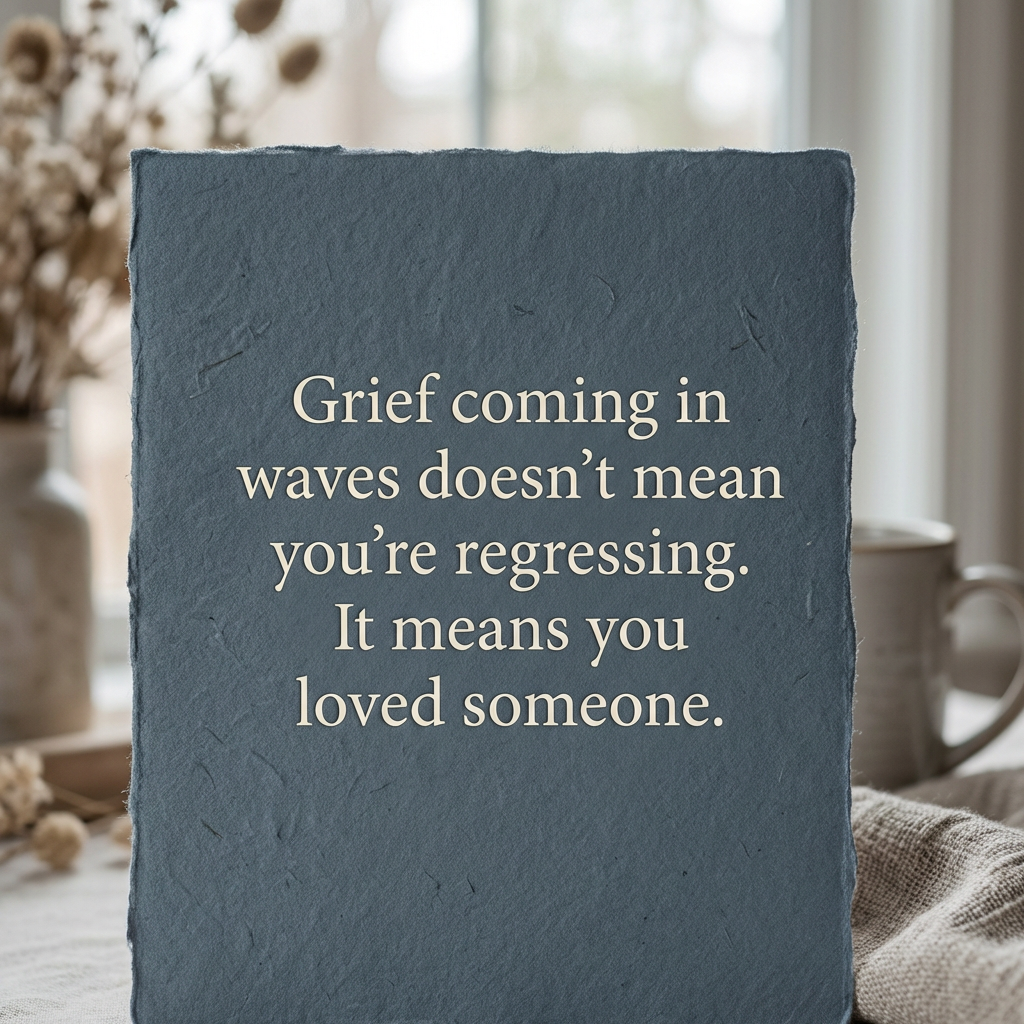
But here's what I've come to understand: grief coming in waves doesn't mean you're regressing.
It means you loved someone.
And love doesn't have an expiration date.
The Science Behind the Waves
There's actually a reason grief hits unexpectedly, and it has to do with how our brains process memory.
Our minds store memories in complex webs of association. A particular song isn't just a song — it's connected to a time, a place, a person, a feeling. The smell of rain might be linked to a childhood memory. A certain phrase might bring back a conversation you'd forgotten you had.
When we encounter one of these sensory triggers, our brain retrieves the associated memory — and the emotions that come with it.
This happens automatically. We don't choose it. We can't predict it.
So when grief hits out of nowhere, it's often because something in your environment — something you may not have consciously noticed — triggered a memory of the person you lost.
This is normal brain function. It's not a sign that you're falling apart.
What the Waves Actually Mean
I used to dread the waves.
When grief would hit unexpectedly, I'd feel frustrated with myself. I'd think I was doing something wrong. That I should be further along in my healing.
But I've slowly come to see these moments differently.
The waves aren't a sign that you haven't healed.
They're a sign that your connection to the person you lost is still alive. That they still matter to you. That your love for them hasn't diminished just because time has passed.
In a strange way, the waves are evidence that the relationship continues — even though it has changed form.
This doesn't make the waves less painful. But it does make them meaningful.
When Grief Hits Out of Nowhere
Sometimes the triggers are obvious. Anniversaries. Birthdays. Holidays. The first time you visit a place you used to go together.
But often, the triggers are invisible.
A certain quality of light. A laugh that sounds familiar. The way someone holds their cup of tea.
You might not even realise what set you off until later — or you might never identify it at all.
This unpredictability is one of the hardest parts of grief. You can be having a perfectly fine day, and then suddenly you're crying in your car, or excusing yourself from a meeting, or standing frozen in the kitchen with no idea how long you've been there.
When this happens, please know: you are not broken.
Grief is simply doing what grief does.
You're Not Going Backward
One of the most harmful ideas about grief is that it should get progressively easier in a straight line.
This sets people up to feel like failures when the pain returns.
But grief isn't linear. It never has been.
The researchers who study grief talk about something called "integrated grief" — which is different from grief that has ended.
Integrated grief means the loss has found a place in your life. You can function. You can experience joy again. But the grief hasn't disappeared. It's woven into who you are now.
And sometimes, something tugs on that thread, and the feelings come rushing back.
This is integration, not regression.
How to Ride the Waves
I wish I could tell you there's a way to stop the waves from coming.
There isn't.
But there are things that help me ride them out when they arrive.
The first is simply acknowledging what's happening. Not fighting it. Not telling myself I shouldn't feel this way. Just letting the wave be a wave.
The second is giving myself permission to feel it fully — even if the timing is inconvenient. Grief doesn't care about your schedule. Sometimes you need to pull over. Sometimes you need to step outside. Sometimes you need to let the tears come, even when you're not somewhere private.
The third is remembering that the wave will pass. It always does. The intensity doesn't last forever — even when it feels like it will.
And the fourth is being gentle with myself afterward. Grief is exhausting. The waves take something out of you. Rest isn't optional; it's necessary.
A Note on Unexpected Grief Years Later
If you're reading this because grief hit you out of nowhere and you're confused about why it's still happening — especially if the loss was years ago — I want you to know that this is completely normal.
There's no statute of limitations on grief.
You might be fine for months or even years, and then something shifts. A new life stage. A milestone the person won't be there for. Your own growing older.
Grief can surface when you least expect it because we process loss in layers. We understand death differently as we move through life. A loss that happened at twenty feels different when you're forty.
This isn't a sign that something is wrong.
It's a sign that you're still here, still growing, still connected to someone who mattered.
Learning to Live with the Waves

After my mum died, I wanted grief to end.
I wanted to reach a point where it didn't hurt anymore. Where I could think of her and feel only warm memories, not this tearing sensation in my chest.
I don't think that point exists — at least not in the way I imagined it.
What exists instead is something quieter. A life that holds both joy and sorrow. Days that are genuinely good, punctuated by moments that take my breath away.
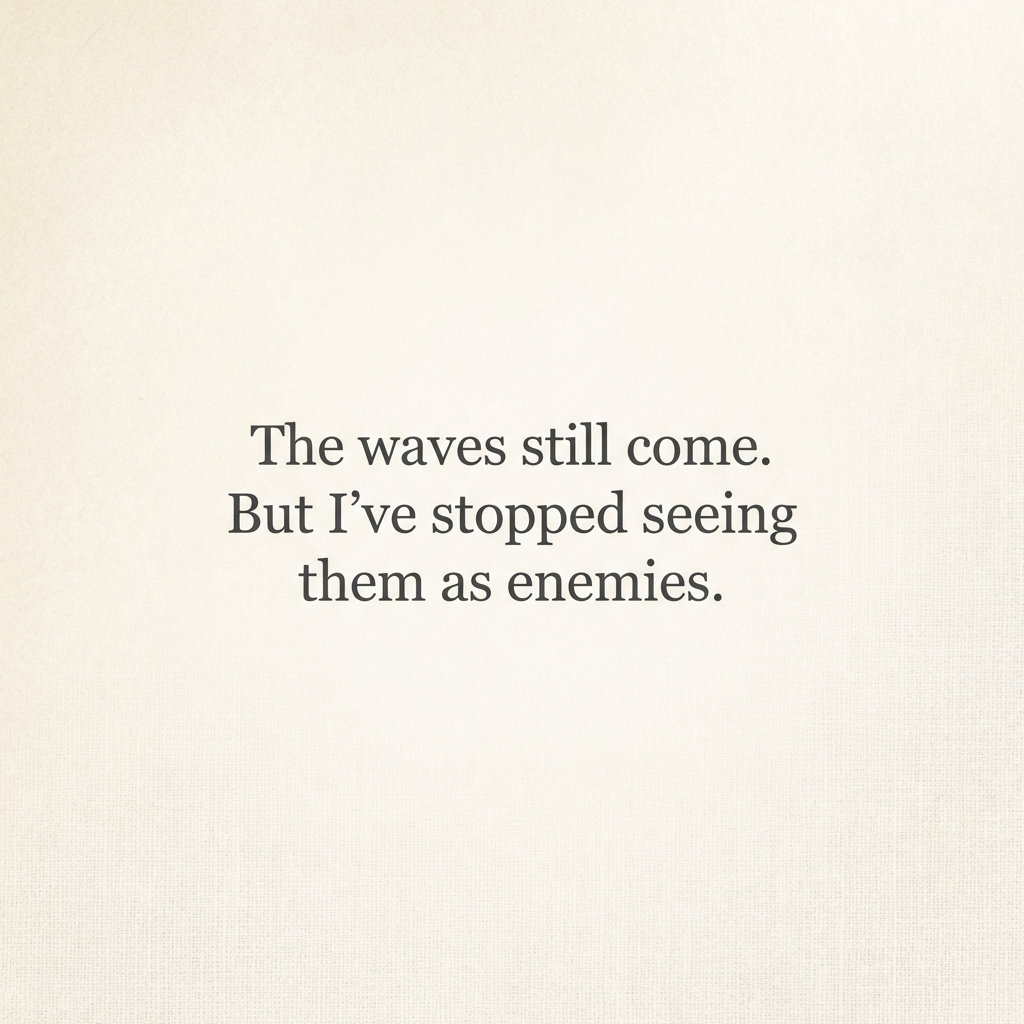
The waves still come. But I've stopped seeing them as enemies.
They're just part of this now. Part of me.
And maybe that's okay.
If you're looking for gentle support as you move through grief, Anam Life offers a 12-week guided experience with letters, rituals, and reflection. Join the waitlist to be notified when we launch.